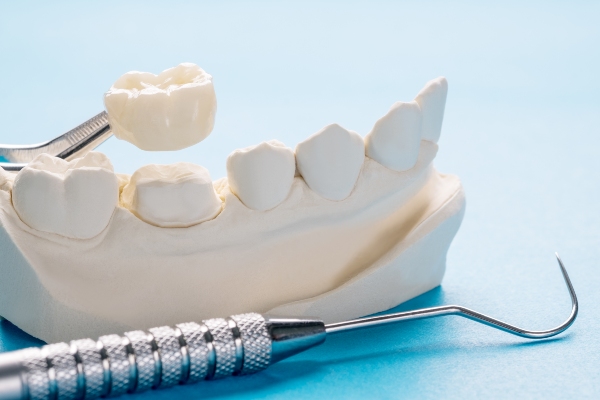
 General dentists use dental crowns to restore damaged or weakened teeth, improving their function and appearance. However, the benefits of dental crowns can be compromised by bruxism. Bruxism, the involuntary grinding or clenching of teeth, usually occurs while individuals are asleep but can also affect them while they are awake. This condition can threaten the longevity and function of dental crowns.
Understanding bruxism
Bruxism is a condition where an individual subconsciously grinds or clenches their teeth, typically when they are asleep. It can also occur when they are awake. Many people grind their teeth occasionally, especially when they are stressed. However, frequent clenching and teeth grinding can put additional strain on the teeth and jaws. Over time, this damage can lead to dental damage, headaches, jaw pain, and other issues.
How bruxism affects dental crowns
Bruxism places excessive pressure on teeth, which can be harmful to both natural teeth enamel and restorations. While dental crowns are durable, they are not immune to these excessive forces. Crowns made of porcelain or ceramic are particularly vulnerable to teeth grinding, as the constant motion can cause chipping, cracking, or complete breakage. In severe cases, the crown may become dislodged, requiring patients to get it repaired or replaced. Repeated damage can result in additional dental procedures, which increases the cost and discomfort for the patient.
The integrity of dental crowns also depends on the condition of the underlying tooth structure. Bruxism can cause micro-movements of the tooth root, leading to loosening of the crown over time. Additionally, the cement used to bond the crown to the tooth can deteriorate under excessive force, reducing the crown’s effectiveness and stability. These issues can compromise oral health, especially if the crown protects a tooth that has undergone a root canal or a large filling.
Another concern associated with bruxism is the wear on the surrounding teeth. If a patient has dental crowns on the upper teeth and grinds against natural lower teeth, the constant friction can wear down both surfaces unevenly. This not only affects the bite alignment but may also result in the need for restorative work on the adjacent teeth. Furthermore, the appearance of dental crowns can suffer, as grinding can dull their polished finish and overall natural look.
Protecting dental crowns from the effects of bruxism
Early diagnosis and management are essential to protect dental crowns and natural teeth from the damaging effects of bruxism. General dentists often recommend using night guards, which create a protective barrier between upper and lower teeth while the patient is asleep. These oral appliances help distribute the grinding force more evenly and reduce direct pressure on the crowns. In some cases, the dentist may also recommend stress management techniques or orthodontic adjustments to address the underlying cause of bruxism.
Choosing the right dental crown material can influence the crown's resistance to bruxism. While porcelain-fused-to-metal and all-ceramic crowns offer excellent aesthetics, zirconia crowns are known for their exceptional strength and durability. For individuals with bruxism, dentists may recommend zirconia as a more resilient option that can better withstand excessive pressure and friction.
Call our office to schedule an appointment
Bruxism can significantly impact the longevity of your new dental crown and the overall structure and integrity of your natural teeth. Northside Dental Care, PC is here to help you protect your smile. Call our office to learn more or to schedule an appointment.
Request an appointment or call Northside Dental Care, PC at 978-206-7077 for an appointment in our Peabody office.
Related Posts
A dental crown often gains attention for its ability to create a beautiful smile, but its true value extends far beyond appearance. This restoration reinforces weakened teeth and chewing function while preserving overall oral health when placed thoughtfully by a general dentist. Understanding the restorative role of crowns helps patients appreciate their long-term benefits and…
When treating a damaged tooth, patients commonly choose between dental fillings and crowns to restore function and appearance. Dental crowns are especially valuable when extensive damage compromises tooth integrity. Understanding the differences between these two restorative options helps patients make informed decisions about maintaining optimal oral health.Dental fillings repair teeth damaged by decay, cavities, or…
Dental crowns are a common restorative treatment used in general dentistry. They can restore severely damaged teeth, saving patients from the pain, time, and cost of extraction and replacement. Further, crowns come in a variety of safe, biocompatible materials. Exploring the facts about dental crowns can make you feel more confident in getting one.Dental crowns…